Credit Card Surcharge Laws by State (2026): What South Dakota Businesses Need to Know

Surcharge rules come from two places, the card networks and state law, and both change. Here is what South Dakota business owners should know before adding a card fee.
What a surcharge is
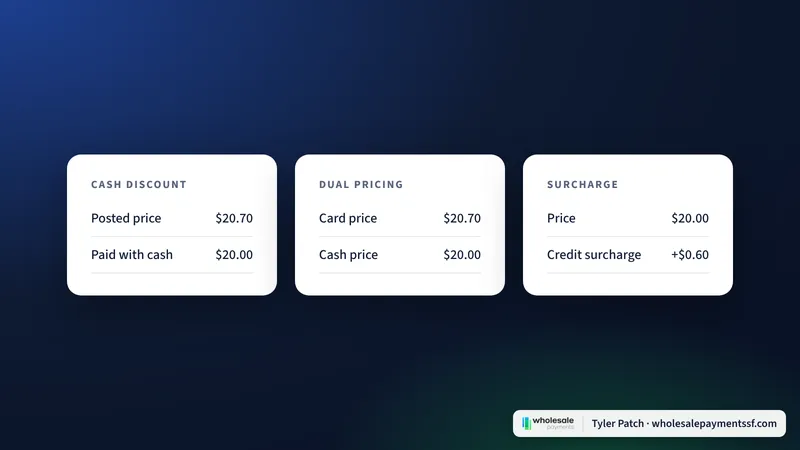
A surcharge is an extra fee added on top of your price when a customer pays with a credit card. It is different from a cash discount or dual pricing, where the discount goes to customers who pay cash.
Card network rules (every state)
- Cap. Visa's rules cap credit card surcharges at 3% (lowered from 4% in 2023). Mastercard's cap is 4%. Both say a surcharge can't be more than what you actually pay to accept the card.
- Credit only. Card network rules don't allow surcharges on debit or prepaid cards, even when they are run as credit.
- Notice. The networks expect advance notice before you start, usually about 30 days, typically sent through your processor.
- Signs and receipts. The networks call for signs at the entrance and the register, and the surcharge shown as its own line on the receipt.
These rules may change. A proposed Visa and Mastercard settlement received preliminary court approval in June 2026 and could change some surcharge rules over the next few years. Check the networks' current rules before you start.
What about South Dakota?
The National Conference of State Legislatures (NCSL) keeps a list of state surcharge statutes, and it shows no South Dakota statute on credit card surcharges. Several industry guides say South Dakota surcharges shouldn't exceed your actual cost of accepting cards, which is what the card network rules already require. We are not attorneys, so if you plan to surcharge, confirm the current rules with your processor and an attorney.
State rules vary
Here is a snapshot from public trackers as of fall 2026. It is a starting point, not a final answer. Laws and court rulings change, so check your state's current law before you start.
| Where | What trackers report |
|---|---|
| Connecticut, Maine, Massachusetts, Puerto Rico | Surcharges not allowed |
| Colorado | Capped at 2% |
| New York, New Jersey, Nevada, Nebraska, Georgia | Limited to your cost of accepting cards |
| Minnesota | Statute requires disclosure and caps surcharges at 5% (network caps are lower) |
| California, Texas, Oklahoma, Kansas | Older bans on the books; court rulings have made enforcement unclear |
Sources: NCSL state surcharge statutes; weAudit 2026 surcharge tracker.
Why many businesses pick cash discount instead
Surcharging has a catch: you can't apply it to debit cards, and debit makes up a big share of card sales at many local businesses. That means you still pay fees on every debit sale. With a cash discount program, the posted price covers card processing on every card, and cash customers get a discount. Federal law (the Durbin Amendment) protects a business's ability to offer customers a discount for paying cash.
Not sure which fits? Compare all three in cash discount vs. surcharge vs. dual pricing.
This guide is general information, not legal advice. We are not attorneys. Rules change, so confirm current rules with your processor and an attorney before you change your pricing.
Frequently asked questions
Does South Dakota have a credit card surcharge law?
As of fall 2026, the NCSL list of state surcharge statutes shows none for South Dakota. Card network rules on caps, signs and receipts still apply. Rules change, so confirm with your processor and an attorney before you start.
Can I add a surcharge to debit card payments?
Card network rules don't allow surcharges on debit or prepaid cards. A cash discount program works differently and covers all cards.
What is the maximum credit card surcharge?
Under current network rules, Visa caps credit card surcharges at 3% and Mastercard at 4%. Some states set lower limits or don't allow surcharges.
Questions about your own setup? Text Tyler.
General information only, not legal, tax or financial advice. Card network rules and state laws change, so confirm current rules before you change your pricing.