Dual Pricing vs. Traditional Processing: Which Fits Your Business?
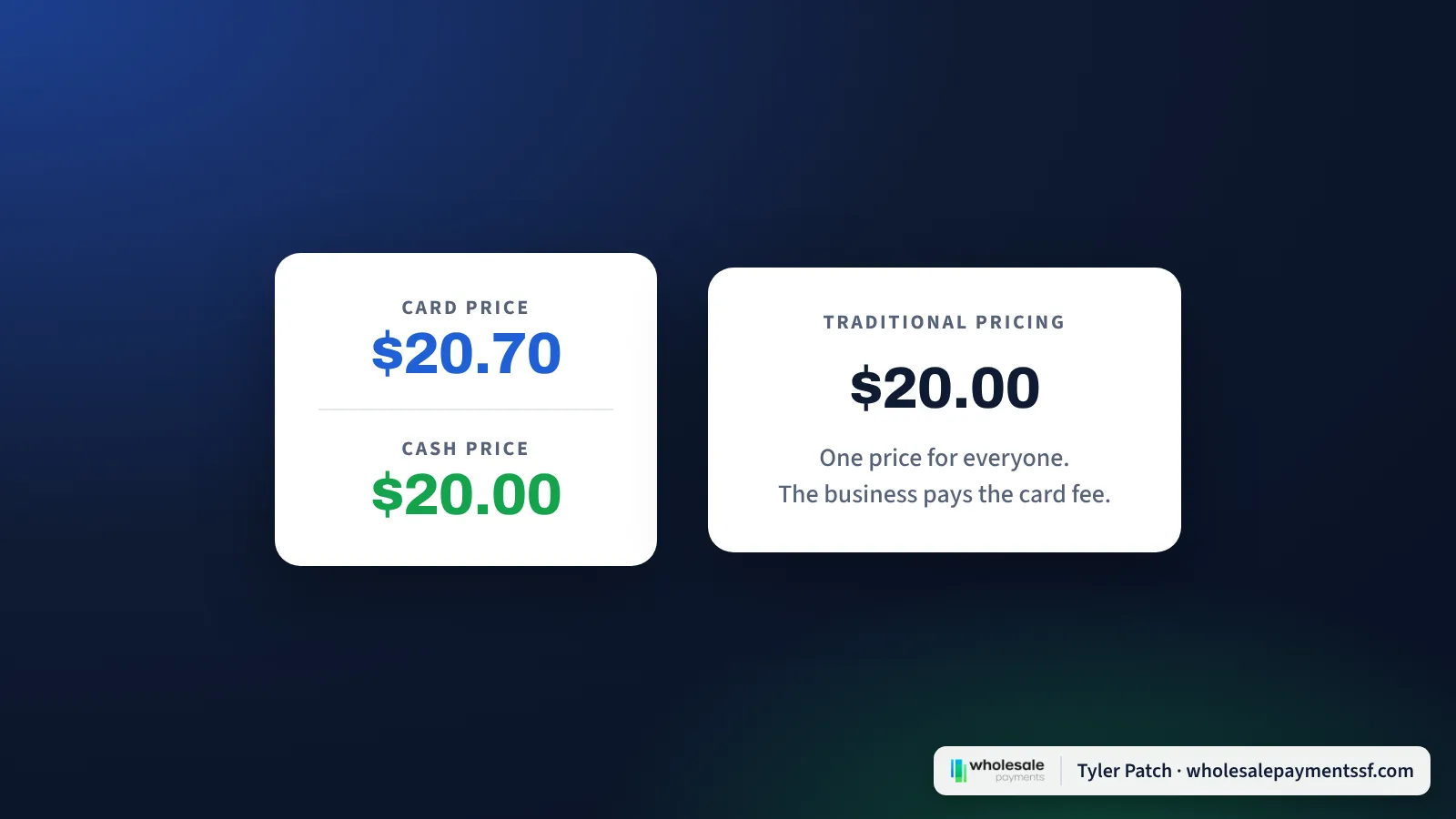
There are two main ways to cut card processing costs. One shifts the cost to card customers. The other keeps checkout exactly as it is and lowers the bill. Here's how to choose.
Option 1: Dual pricing (cash discount)
Customers see a card price and a cash price. The card price covers the cost of acceptance, so your processing fees can drop to near zero (you may still pay a monthly program fee). It works best when card sales are a large share of revenue and margins are tight: restaurants, bars, coffee shops, auto repair, salons, contractors and convenience stores. Read the full guide to dual pricing in South Dakota.
Option 2: Traditional processing at wholesale rates
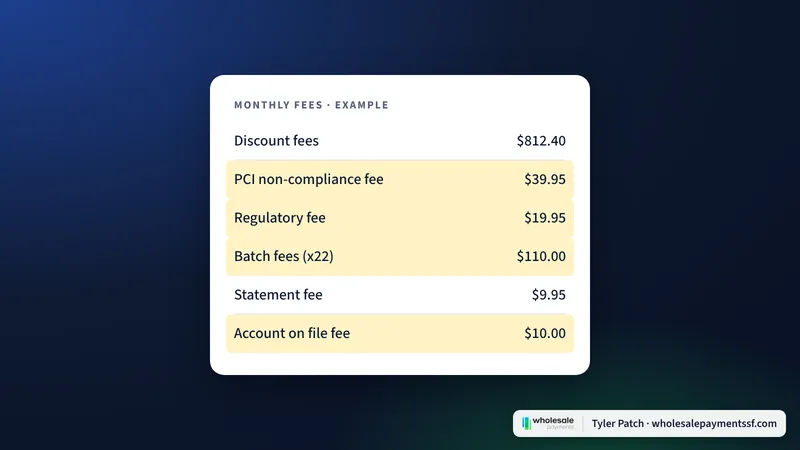
Customers pay exactly what they pay today. You still pay processing, so the goal is a lower bill: card network costs passed through at cost, a clear markup, and no monthly fees you don't need. Ask for every fee in writing before you switch.
This fits businesses where price display is sensitive: medical and dental offices, professional services, B2B sellers with set contract pricing, and high-end retail.
Side by side
| Dual pricing | Traditional, wholesale rates | |
|---|---|---|
| Your processing cost | Near zero, plus any program fee | Lower than today |
| What customers see | Card price and cash price | No change |
| Fees | Flat monthly program fee | Wholesale rate plus a small markup |
| Funding | Next day | Next day |
The easiest way to decide
Pull your last merchant statement, find the total fees line and divide it by your card sales. If card sales are a big share of revenue and margins are thin, dual pricing usually saves more. If you'd rather not change anything customers see, traditional pricing keeps checkout the same. You can also switch between the two later if your business changes.
Frequently asked questions
Can I switch from dual pricing back to traditional processing?
Yes. Your rep can move you between dual pricing and traditional processing if your needs change.
How much can traditional processing save?
It depends on what you pay today. Savings usually come from a lower markup and from dropping monthly fees you don't need. Compare effective rates side by side before you switch.
Which option is better for a restaurant?
Many restaurants choose dual pricing because card sales are a large share of revenue and margins are thin. Run both options against your own statement to see the difference.
Questions about your own setup? Text Tyler.
General information only, not legal, tax or financial advice. Card network rules and state laws change, so confirm current rules before you change your pricing.